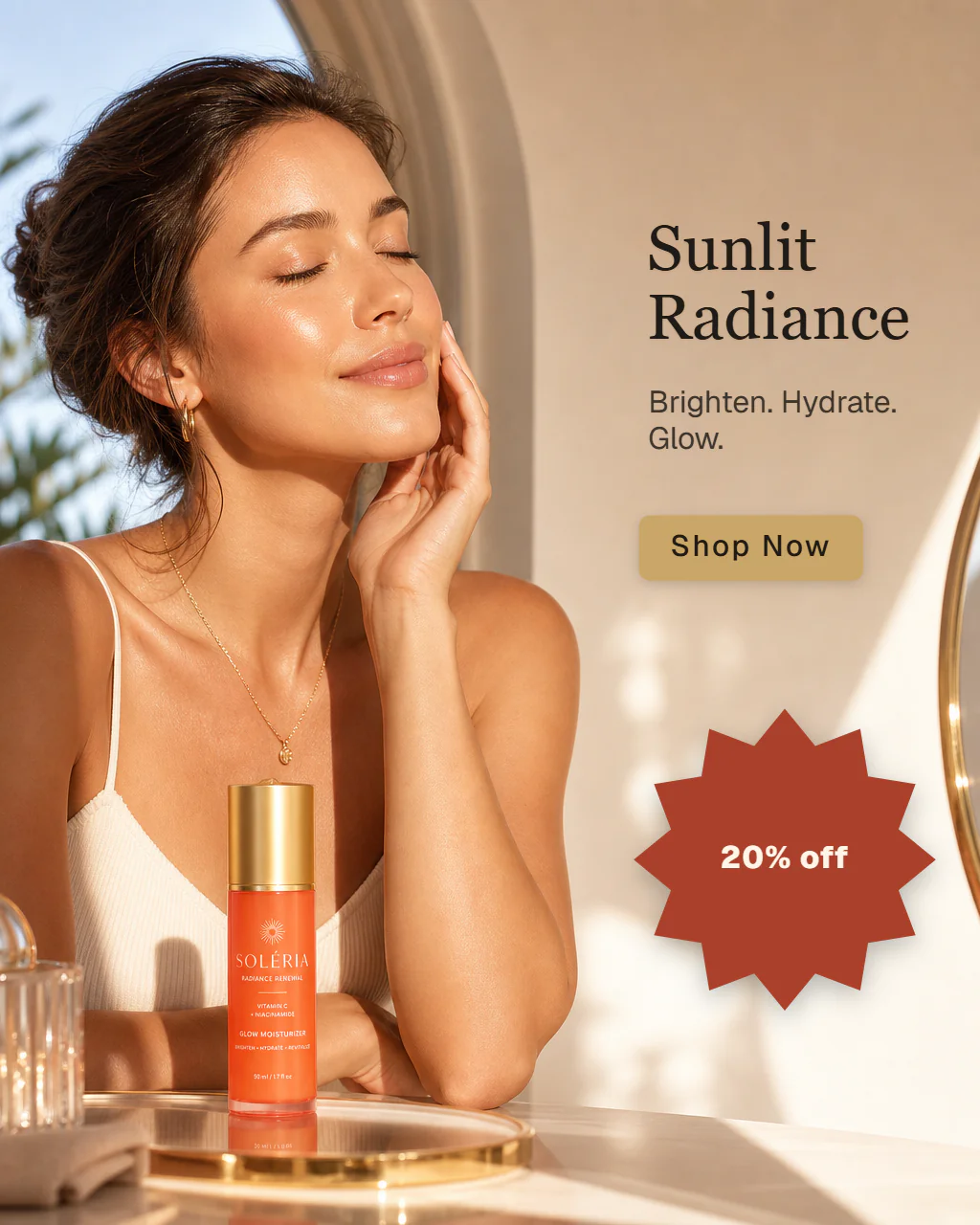
Percentage-Off Sale
Callout: 20% OFF
A 20% discount is immediately understandable, but it isn't the whole pitch. Sunlit Radiance still leads with the product and warm, aspirational styling, while the offer adds a clear reason to buy now.
Promotional ad examples
Explore promotional advertisement examples built around discounts, bundles, limited-time offers, product launches, seasonal campaigns, and other reasons to buy. Each example is a complete finished advertisement, with the product, offer, copy, and creative direction working together.
Fast signup. No credit card required.
See the range
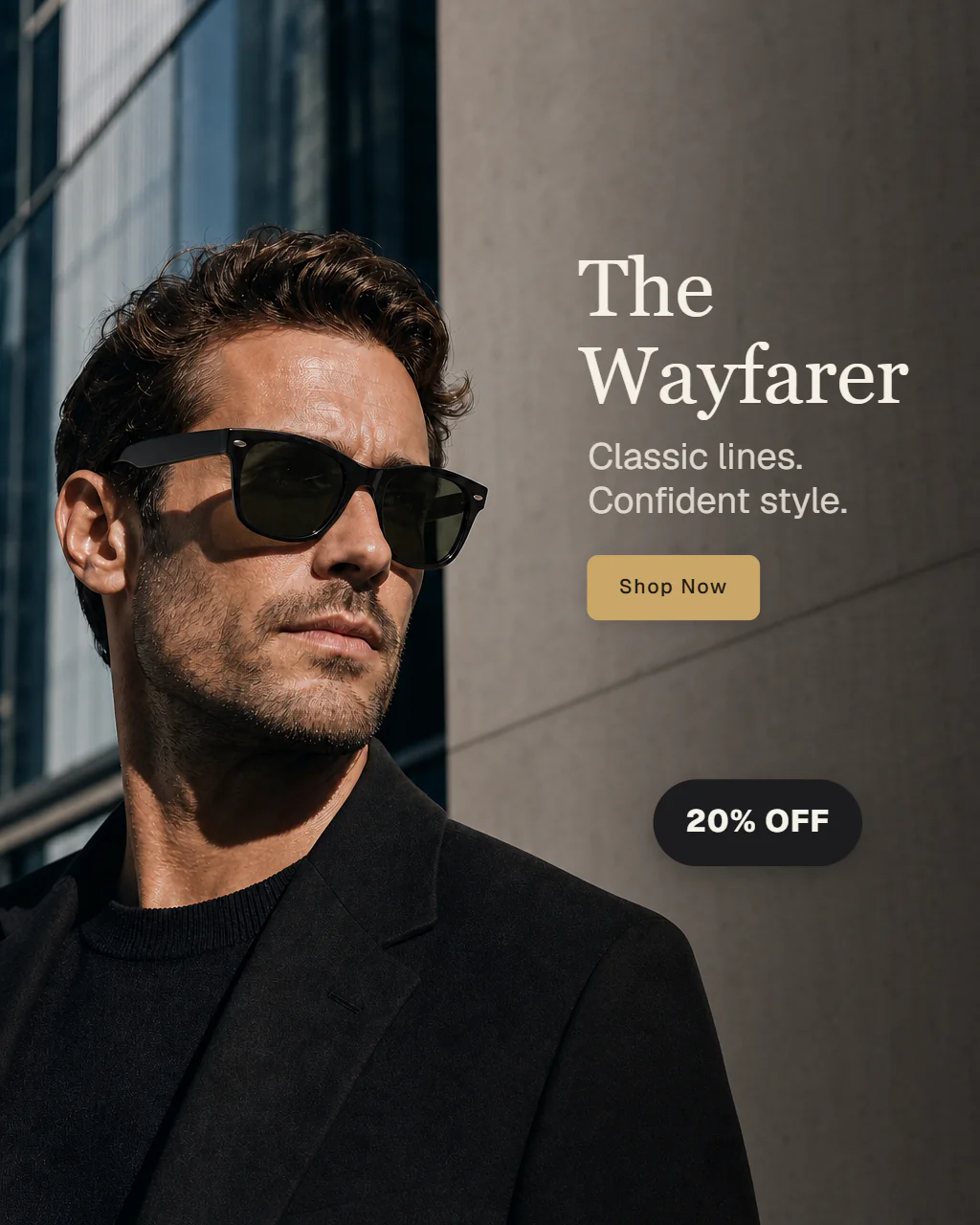
Every advertisement below represents a different reason someone might buy right now. A discount, bundle, launch, gift, or limited-time offer can change not only the message, but the emphasis and direction of the entire ad.
Percentage-Off Sale
A 20% discount is immediately understandable, but it isn't the whole pitch. Sunlit Radiance still leads with the product and warm, aspirational styling, while the offer adds a clear reason to buy now.
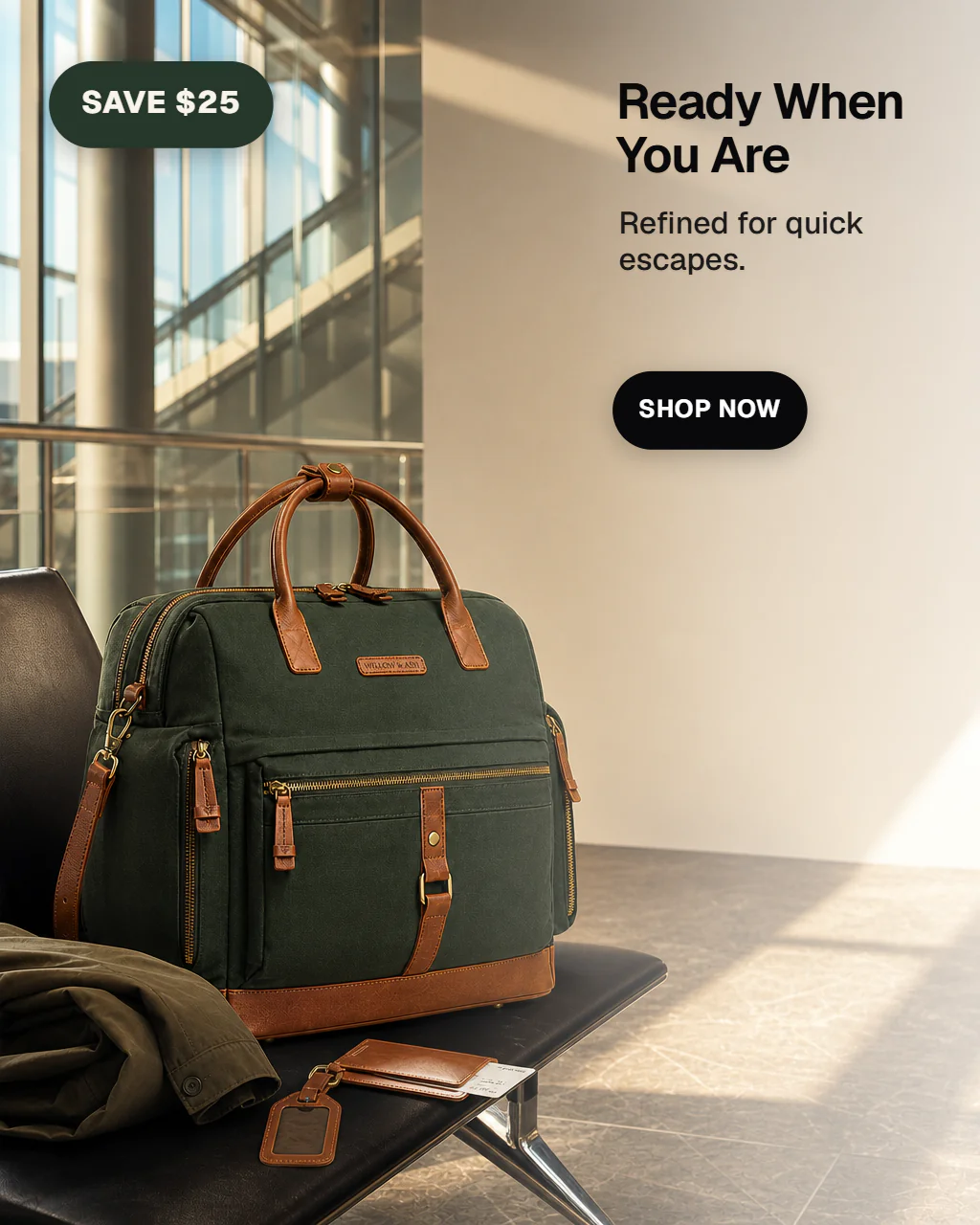
Dollar-Off Offer
SAVE $25 makes the savings concrete — no mental math, just an exact amount off the price. Ready When You Are keeps the weekender itself at the center of the ad, with the discount strengthening the offer rather than becoming the whole message.
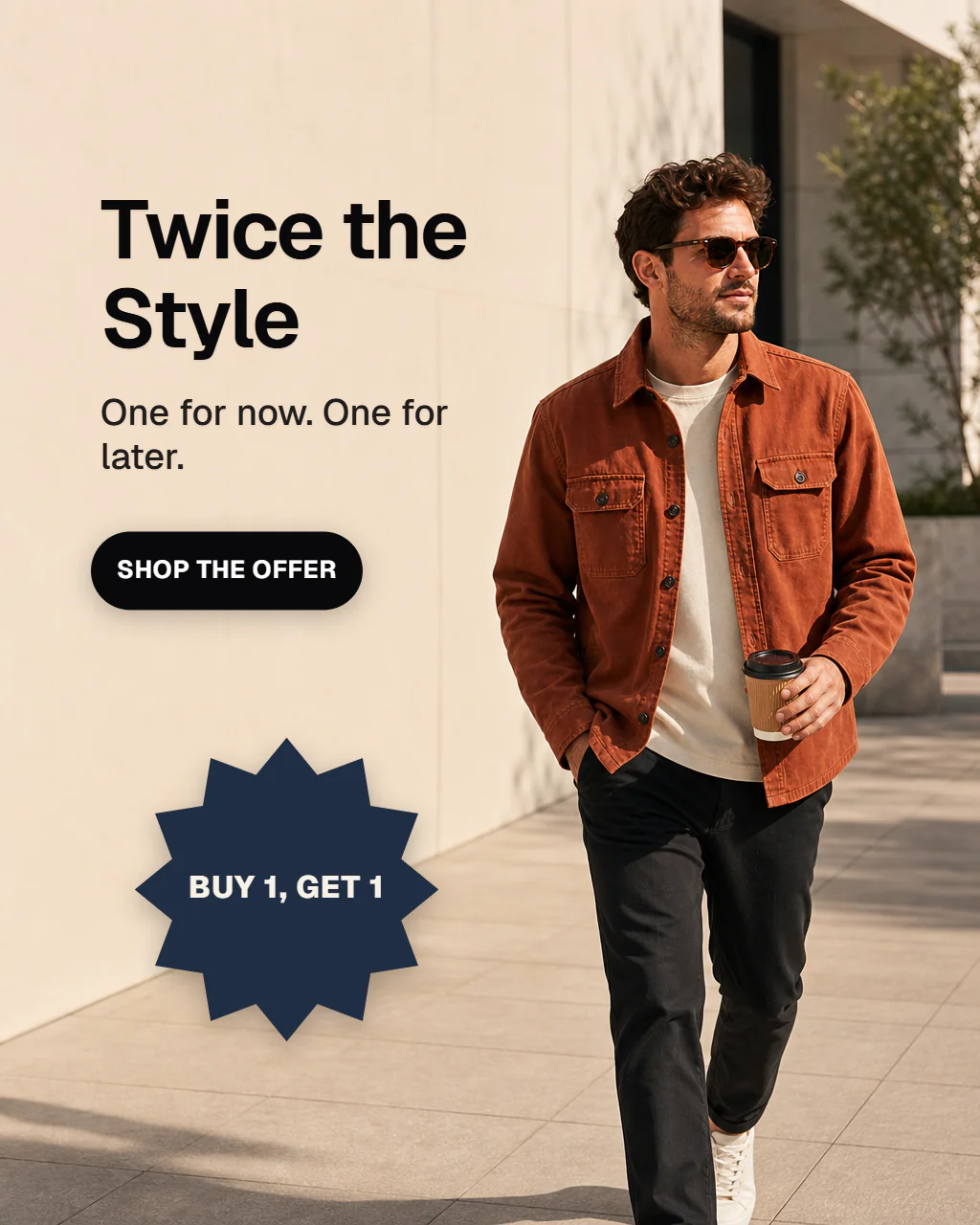
Buy One, Get One
A buy-one-get-one offer makes the added value immediate while encouraging customers to purchase more than one item. Here, BUY 1, GET 1 is unmistakable at a glance, while the overshirt and lifestyle creative still carry the appeal.
Bundle and Save
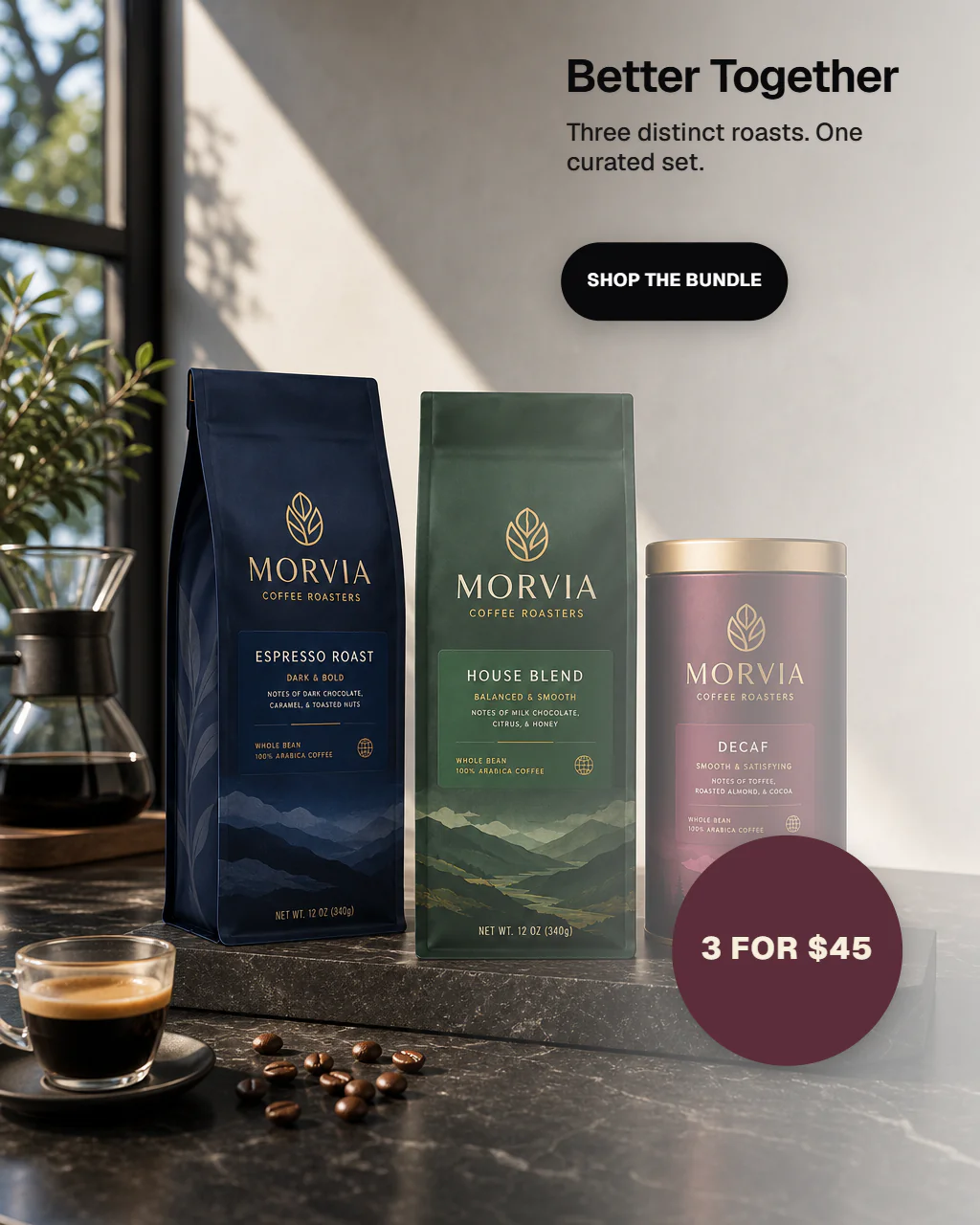
Bundle promotions make a larger purchase more appealing by presenting several products as one clear offer. Here, three distinct coffee roasts become a curated set, while 3 FOR $45 makes the combined value easy to understand.
Free Gift With Purchase
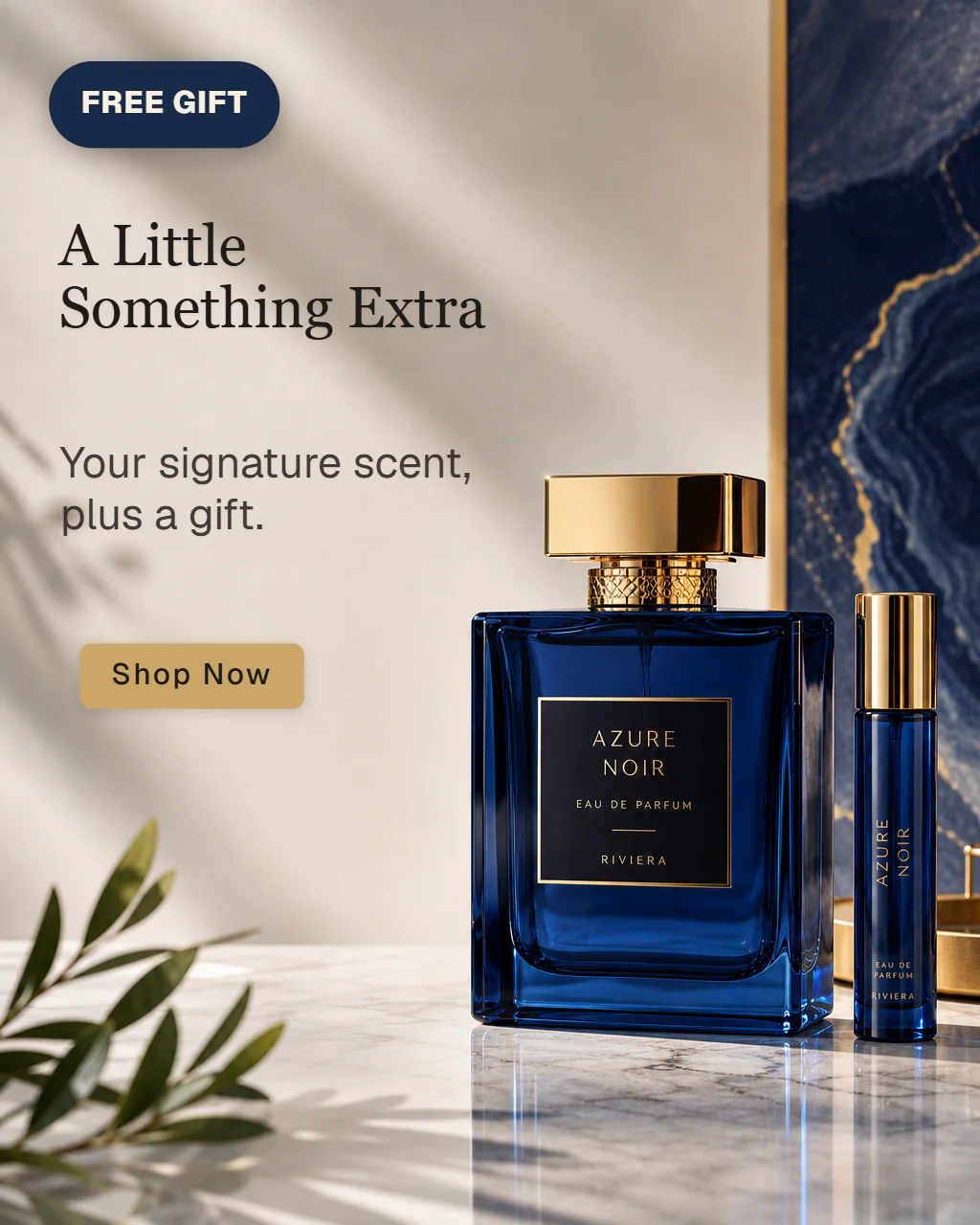
A free gift adds value without discounting the main product itself. Here, the full-size Azure Noir fragrance remains the hero, while the matching travel spray makes the added value tangible and immediately visible.
Limited-Time Offer
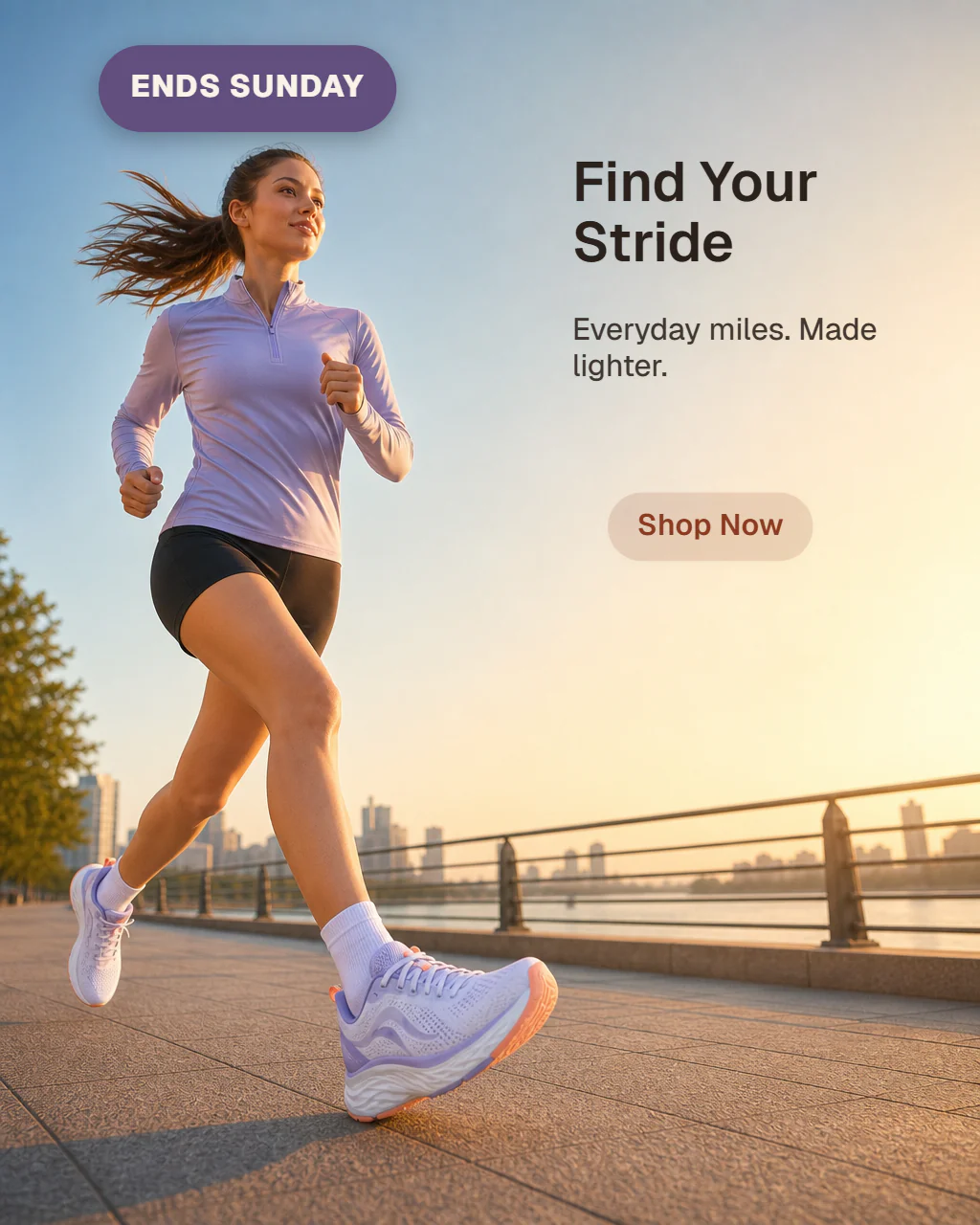
A limited-time offer works best when the deadline is specific and credible. Here, ENDS SUNDAY gives shoppers a clear reason to act now, while the running-shoe campaign still leads with movement, energy, and the product itself.
New Product / New Arrival
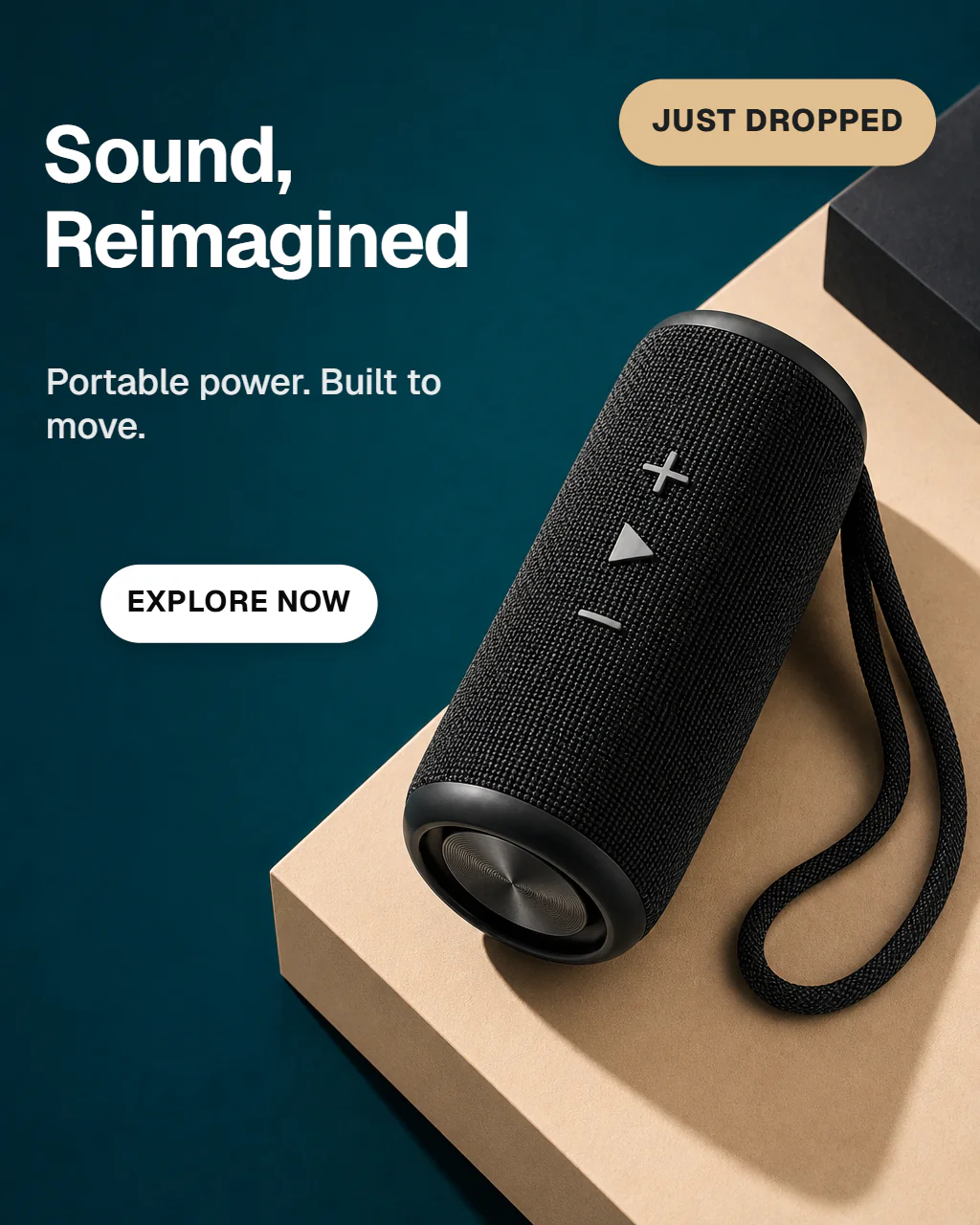
A product launch doesn't need a discount to feel promotional. Here, JUST DROPPED signals that something new has arrived, while the bold geometric presentation keeps the portable speaker itself firmly in focus.
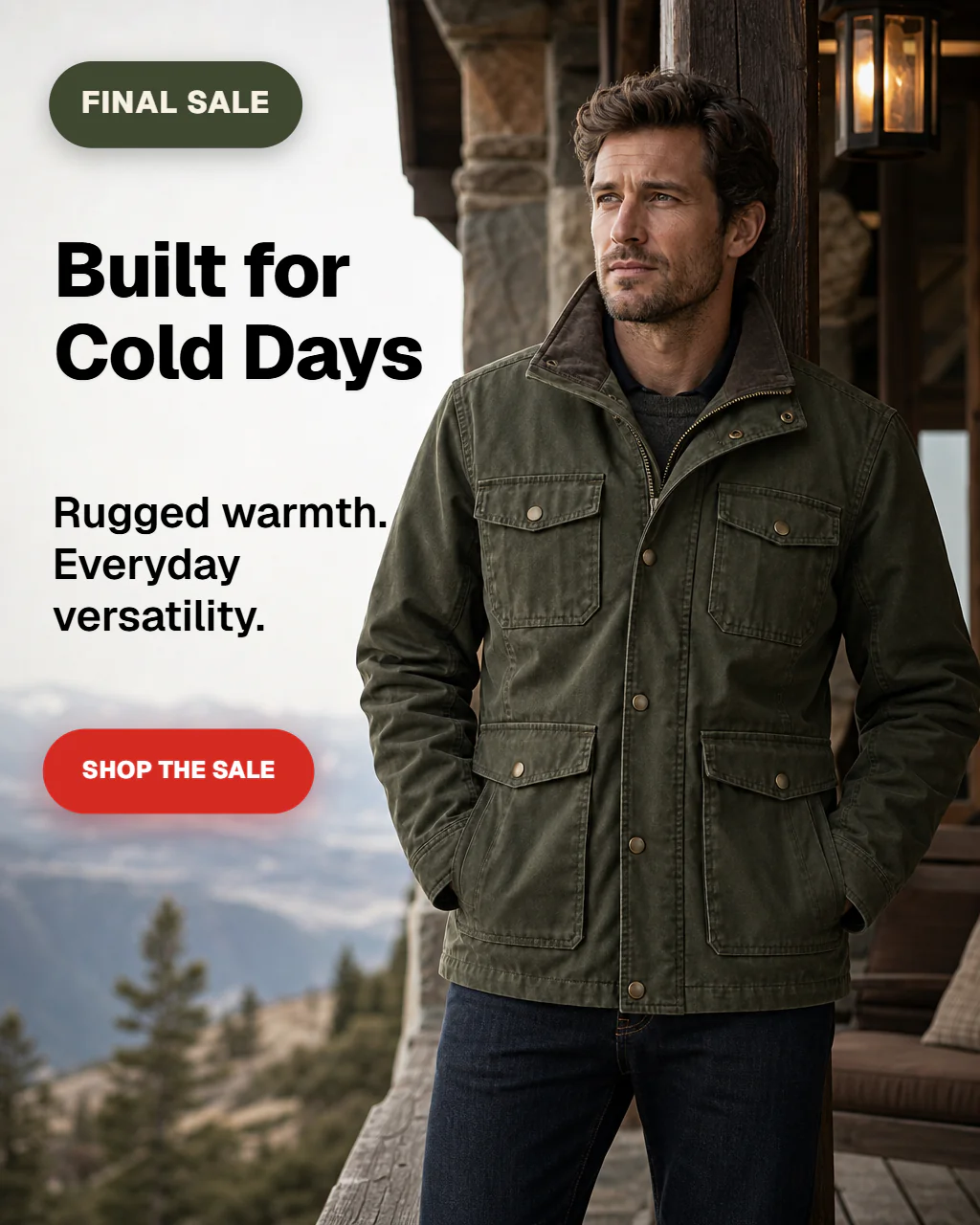
Seasonal / Clearance Promotion
Seasonal clearance messaging can create urgency without overwhelming the product. Here, FINAL SALE gives shoppers a clear reason to act, while the jacket, setting, and cold-weather positioning continue to carry the creative.
Real AdBuzz output. Every advertisement on this page was created in AdBuzz from a product image.
Same product, different offers
The product can stay the same while the reason to act changes completely. A product launch, free shipping, a limited-time offer, and a bundle can each lead to a different advertising concept, not just different words on the same layout.
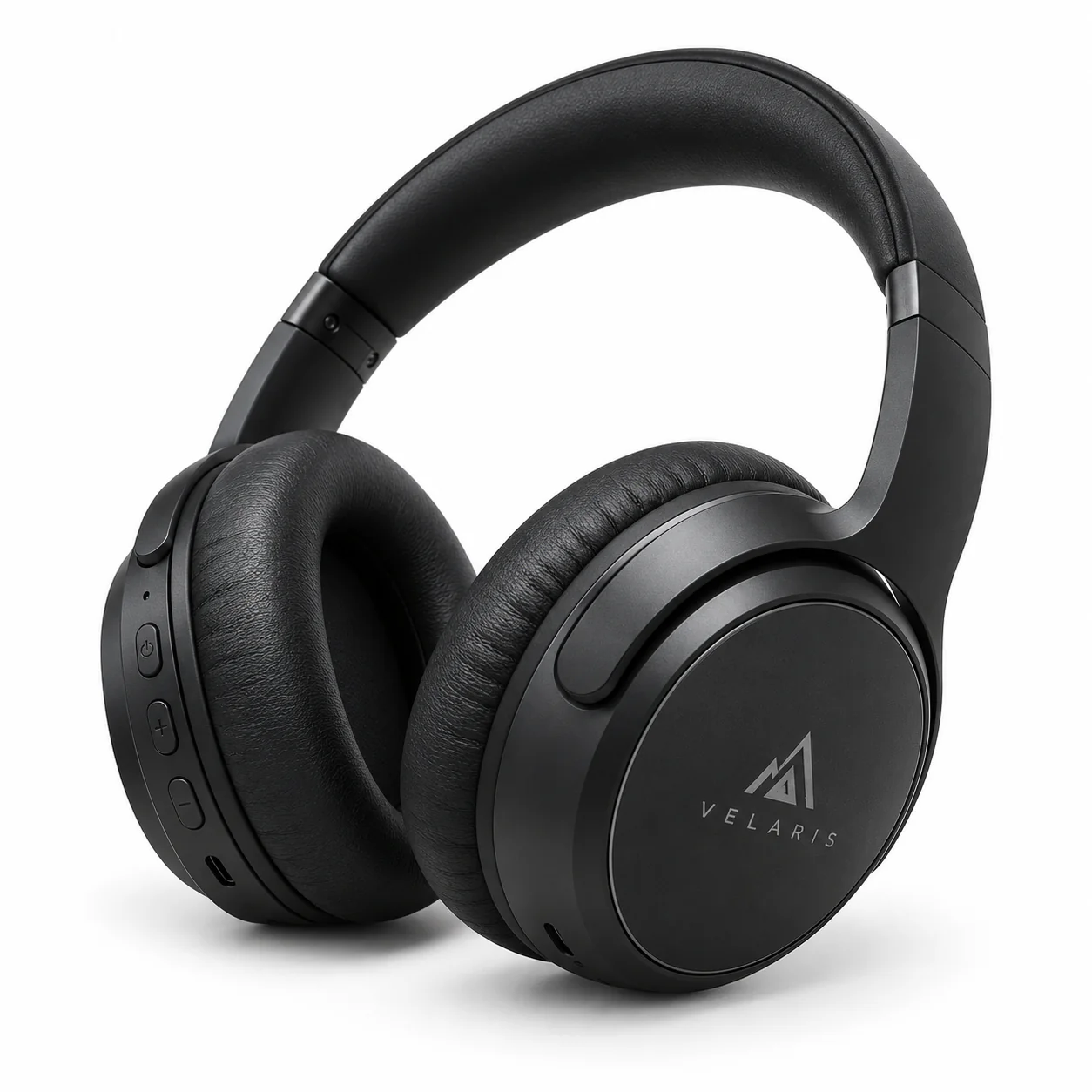
Source product
One product image.
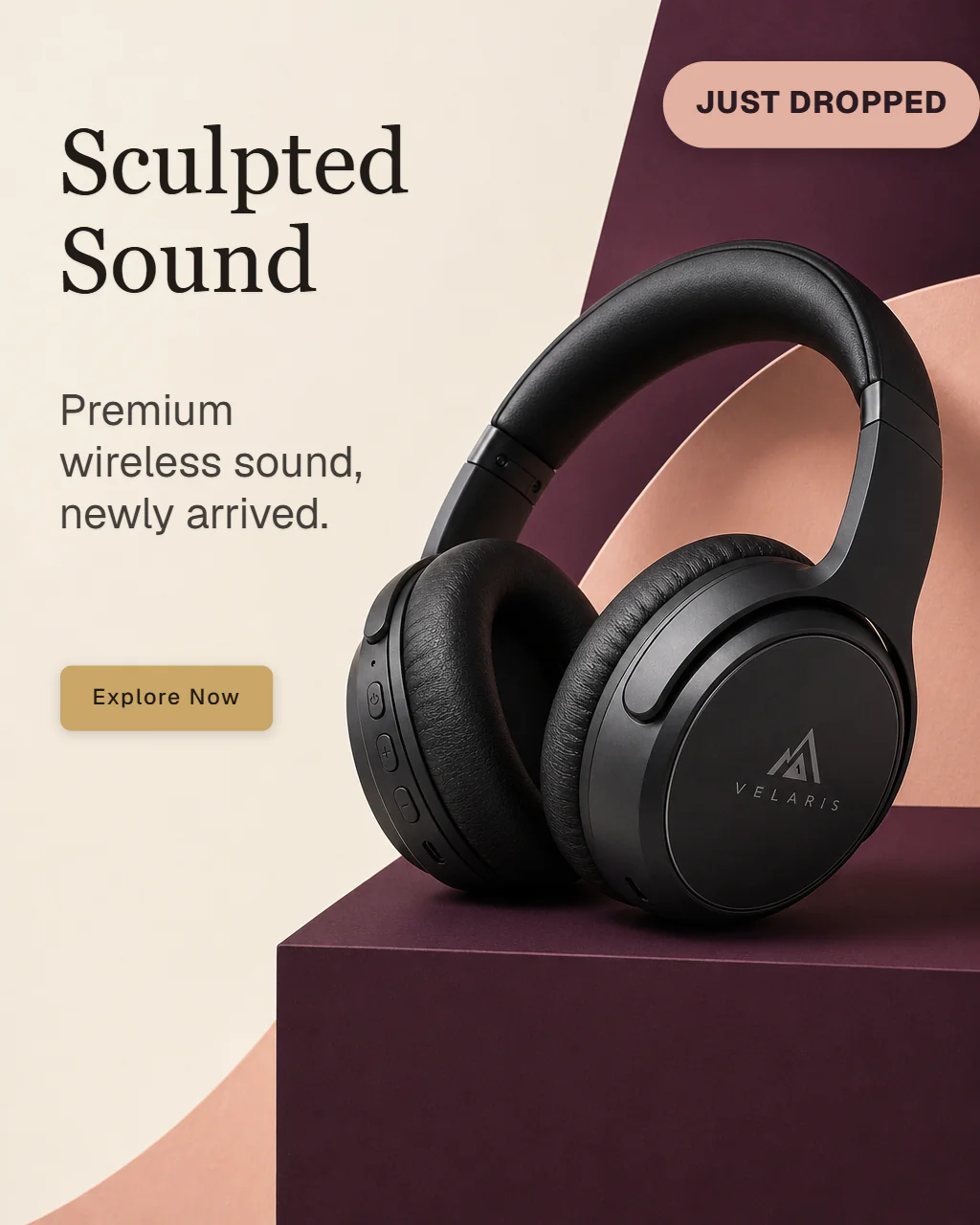
New Product / New Arrival
A product launch can create its own reason to act without relying on a discount. Here, “JUST DROPPED” introduces the new Velaris headphones, while the bold geometric presentation keeps the product and premium positioning at the center of the ad.
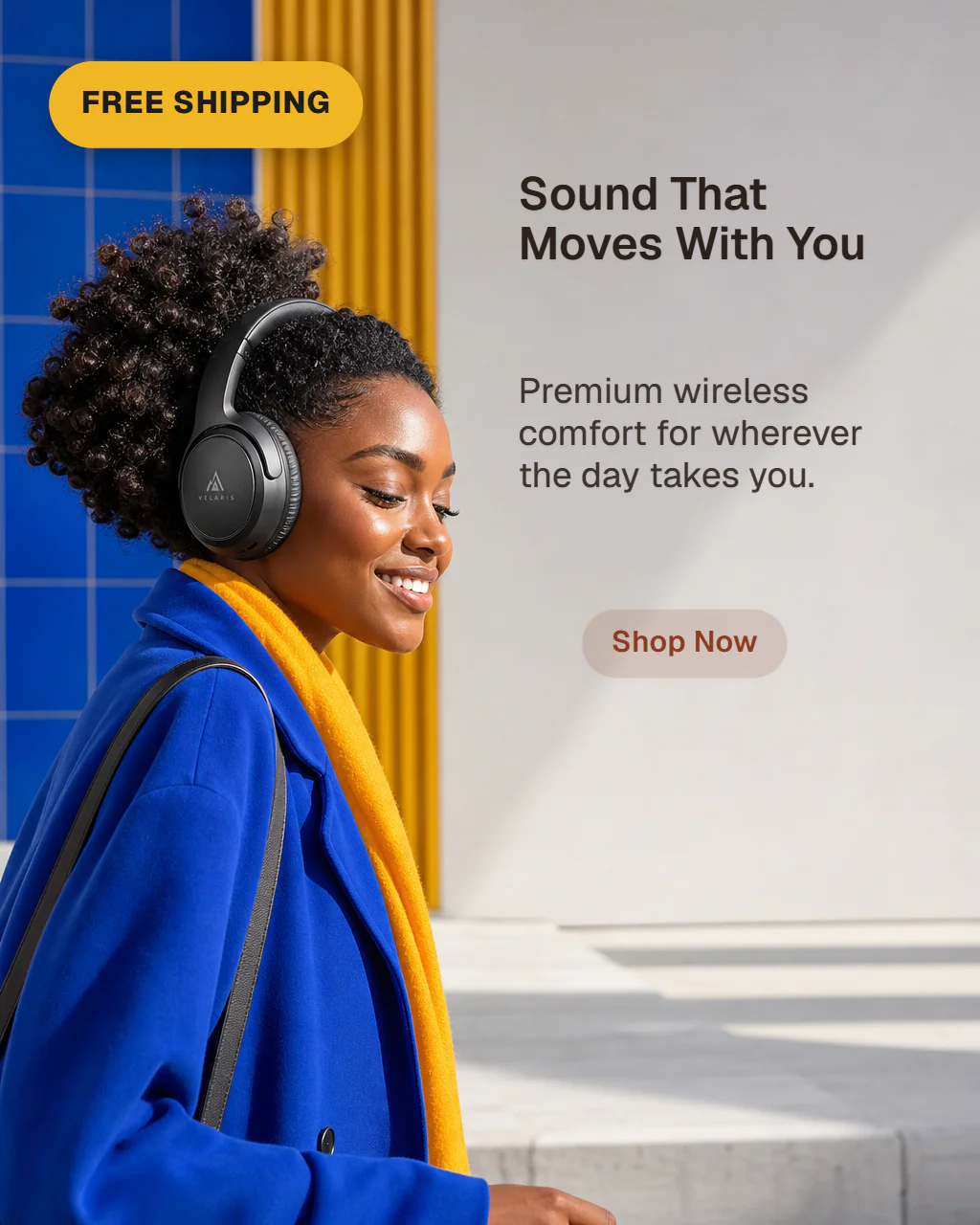
Free Shipping
Free shipping removes an extra cost without discounting the product itself. Here, the offer is easy to spot, while the vibrant lifestyle creative keeps the Velaris headphones and the experience of using them at the center of the ad.
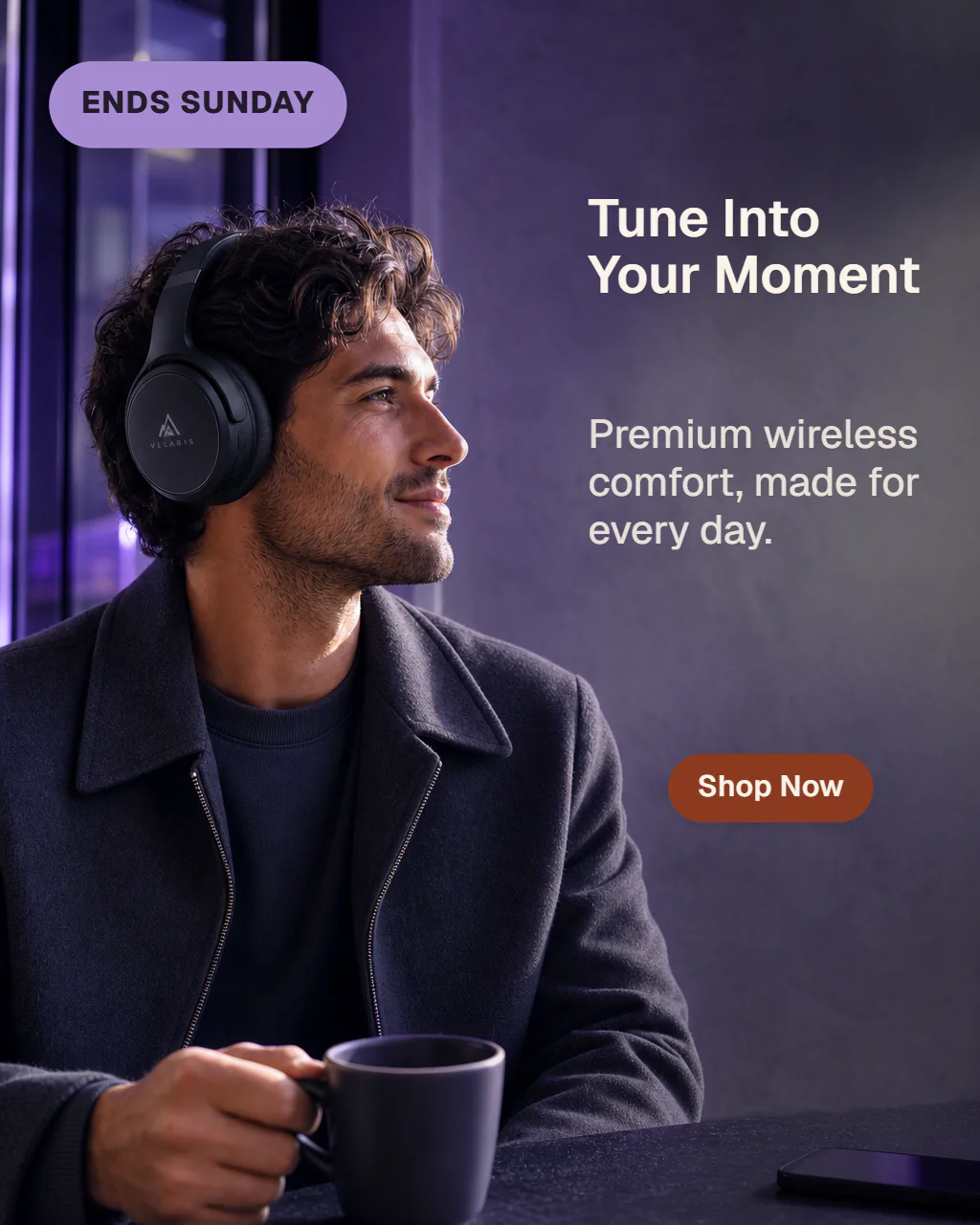
Limited-Time Offer
A specific deadline can create urgency without taking over the entire advertisement. Here, “ENDS SUNDAY” gives the customer a clear reason to act now, while the lifestyle setting and product experience remain the focus.
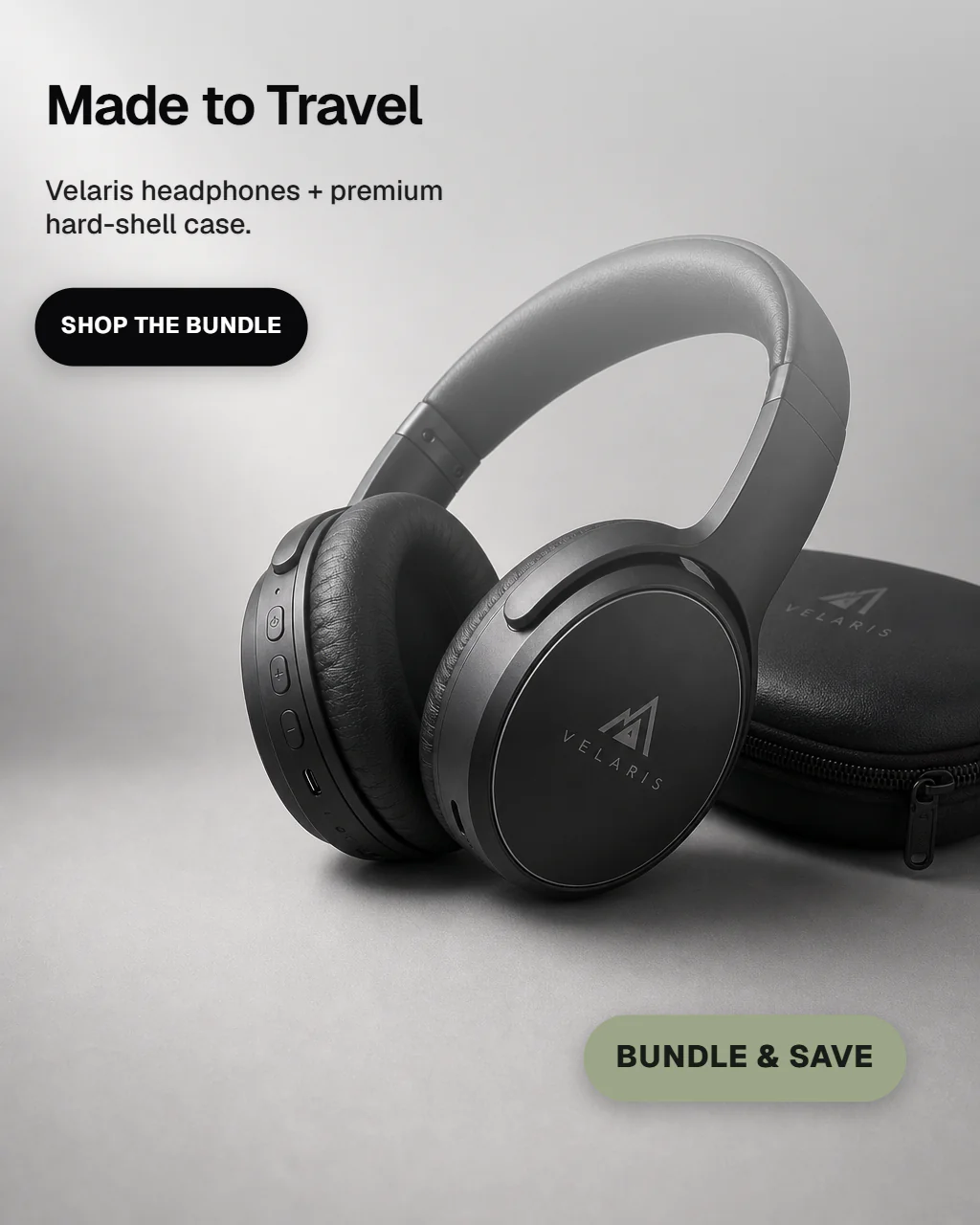
Bundle & Save
A bundle can add value without changing the core product. Here, the Velaris headphones remain the hero while the premium hard-shell travel case makes the offer tangible and gives the customer a clear reason to buy the pair together.
Changing the offer should change more than the words. Visual hierarchy, Callout prominence, supporting message, and product presentation can all shift with it. A product launch, shipping offer, deadline, and bundle should not look like the same advertisement with a few words swapped.
Upload a product image, tell AdBuzz about the promotion you want to run, and see it become a complete finished advertisement.
Promotional mechanisms
Promotional advertising can be built around many different kinds of offers and buying occasions. Different promotions create different reasons to act, and the right approach depends on what you are selling, what you want the customer to do, and what kind of value will be most meaningful to them.
Percentage-off promotions communicate savings relative to the original price, making them easy to use across products with different price points. Offers such as “20% OFF” are familiar and immediately recognizable. But the size of the percentage is only part of the story: on an inexpensive product, even a large percentage may represent relatively little money, while on a higher-priced purchase the actual dollar savings may be more persuasive.
Dollar-off promotions state the savings directly: “Save $25” requires no calculation to understand what the customer keeps. They can be especially effective when the dollar amount itself feels substantial, particularly on higher-priced products. On lower-priced items, the equivalent percentage may sometimes make the size of the discount easier to appreciate.
Buy-one-get-one and other multi-buy promotions tie the incentive to purchasing more than one item. They can encourage customers to increase quantity while making the added value easy to understand: “Buy One, Get One Free” or “2 for $30.” These offers work especially naturally for products people use repeatedly, share, give away, or buy in multiples.
Bundle promotions package multiple products together, usually for less than buying each item separately. Instead of focusing on the discount on a single product, the advertisement needs to make the combined value of the bundle easy to understand. Bundles can also encourage a larger purchase by pairing complementary products into one offer.
A free gift with purchase adds value without reducing the product's price, which can be useful for brands that want to create an incentive without relying on a visible discount. The offer is strongest when the gift is specific and desirable: “Free Travel Case” communicates more value than simply saying “Free Gift.”
Free-shipping promotions remove a cost that customers encounter in addition to the product price. The offer is simple, concrete, and especially relevant to online shopping, where shipping charges can affect the perceived cost of completing an order. It can stand alone as the promotion or be tied to a threshold such as “Free Shipping Over $50.”
Spend-and-save promotions tie the incentive to reaching a purchase threshold, such as “Spend $100, Save $20.” Unlike a standard dollar-off discount, the customer must increase the order value to qualify. These offers can encourage larger baskets when the threshold feels attainable and the savings are meaningful.
Gift-card promotions add value without reducing the current purchase price. An offer such as “Spend $100, Get a $20 Gift Card” gives the customer something tangible to use later while also encouraging a future purchase. The qualifying amount, gift-card value, and any restrictions should be easy to understand.
Limited-time promotions give customers a specific window in which to act. A clear deadline such as “Ends Sunday” or “This Week Only” can make an existing offer more urgent without changing the underlying product. The deadline should be real and easy to understand; repeated or artificial urgency can weaken trust over time.
A product launch gives customers a reason to pay attention because the product itself is new. The promotion does not necessarily need a discount: “NEW,” “JUST LAUNCHED,” or an introductory offer can provide the reason to act. Launch advertising should make clear what is new and why the audience should care.
Seasonal promotions connect an offer to a specific time of year, holiday, event, or buying occasion. The season can provide both a natural deadline and a creative theme, but the advertisement should still make the actual offer easy to find. “20% Off for Mother's Day” communicates more than seasonal imagery alone.
Clearance promotions are designed to move remaining, seasonal, or discontinued inventory, so the offer is usually more direct and price-focused than everyday brand advertising. Clear markdowns and genuine scarcity can give customers a reason to act, but frequent clearance messaging can also weaken the sense that full price is worth paying.
First-purchase promotions give new customers an extra reason to place their first order. A welcome discount, free shipping, or another introductory benefit can reduce hesitation for someone who has not bought from the brand before. The offer should be easy to understand and clearly limited to eligible first-time customers.
Loyalty promotions reward customers for continuing to buy from the brand. Points, member-only pricing, bonus rewards, and double-points events can make repeat purchases feel more valuable without relying on the same public discount for everyone. The strongest programs make both the reward and the path to earning it easy to understand.
Referral promotions reward existing customers for bringing in someone new, often with an offer such as “Give $20, Get $20.” They can create value for both the current customer and the person being referred while turning word of mouth into a measurable acquisition channel. The reward, eligibility, and timing should be stated clearly.
Choosing a promotion
The right promotion depends on what you want it to accomplish. Driving an immediate sale, increasing order size, launching a product, and winning a first-time customer can call for very different offers.
When the goal is short-term sales, a clear financial incentive can give customers a reason to buy now rather than later. Percentage-off and dollar-off promotions make the savings explicit, while a genuine limited-time deadline adds a reason not to postpone the purchase.
Good fits: Percentage-off, dollar-off, limited-time offers
To encourage a larger purchase, structure the promotion around quantity or combined value rather than simply reducing the price of one item. Bundles, multi-buy offers, and spending thresholds can give customers a reason to add more to the order.
Good fits: Bundles, multi-buy offers, free-shipping thresholds
A new product already has a built-in reason for attention: it is new. Launch advertising can lead with that novelty, explain what makes the product worth discovering, or pair the introduction with a limited introductory offer when an added incentive makes sense.
Good fits: New-arrival messaging, introductory offers, launch bundles
When inventory needs to move before a season ends or stock becomes obsolete, the promotion can emphasize markdowns, a real end date, or limited remaining availability. The urgency should come from the actual inventory or calendar constraint rather than artificial scarcity.
Good fits: Clearance, final sale, seasonal discounts, limited-time offers
For someone who has never purchased from the brand, an introductory incentive can make the first order easier to justify. First-purchase discounts, free shipping, and gifts with purchase can add immediate value without requiring an existing relationship with the customer.
Good fits: First-purchase discounts, free shipping, free gifts
Repeat-purchase promotions can give existing customers a reason to return sooner or buy more of something they already know. Reorder discounts, loyalty rewards, multi-buy offers, and customer-specific promotions can reward repeat behavior without treating every purchase like a first-time acquisition.
Good fits: Reorder offers, loyalty rewards, multi-buy offers, customer-specific promotions
Advertising fundamentals
A strong promotional advertisement makes the offer easy to understand without letting the promotion bury the product, the brand, or the reason someone wanted it in the first place.
A promotional advertisement should make the basic value of the offer easy to grasp at a glance. Customers should understand what is discounted or included, what they need to do to qualify, and any important threshold, deadline, or restriction. The main message should be clear without burying essential conditions in fine print.
The promotion should support the product, not replace it. A compelling discount does little good if the product itself gets lost in the advertisement. The customer should come away understanding both what the offer is and what they would actually be buying.
Decide what the viewer needs to notice first, second, and third. In a discount ad, the offer may deserve immediate attention; in a product launch, the product or headline may lead instead. Headlines, promotional callouts, supporting copy, and calls to action should work together rather than compete for attention.
Concrete offers are easier to evaluate than vague promotional language. “20% Off,” “Buy 2, Get 1 Free,” and “Free Shipping Over $50” tell customers what value is actually being offered. “On Sale Now” leaves much more unanswered.
A real deadline or genuine inventory constraint can give customers a reason not to postpone a purchase. “Ends Sunday” or “While Supplies Last” is meaningful when the deadline or scarcity is real. Repeated countdowns and artificial pressure can undermine trust instead of creating urgency.
Not every promotion needs to shout. A premium product, new arrival, or modest incentive may benefit from keeping the product and brand visually dominant while the promotion plays a supporting role. The prominence of the offer should fit both the value of the promotion and the way the brand normally communicates.
Positioning
A discount does not need to dominate the advertisement to work. A 20% discount for a luxury skincare brand does not need to look like a supermarket clearance sign, and a bundle or a free gift can create real value without training customers to wait for the next markdown.
A promotion should feel like it came from the same brand as everything around it. Keep the product, typography, imagery, color, and tone consistent with the brand while giving the offer enough prominence to be understood. A premium promotion can still be obvious without borrowing the visual language of a clearance sale.
That same restraint carries into a feed. Facebook Ad Examples and Instagram Ad Examples show how the same promotional discipline holds up once the advertisement actually lands in front of someone.
Urgency should stay honest. A real deadline gives customers a legitimate reason not to wait. A countdown that simply resets every week creates artificial pressure and can undermine trust over time.
Prominent vs. restrained treatment
The offer takes greater visual priority through size, contrast, repetition, or dedicated promotional graphics. This can make sense when the incentive is unusually strong, the campaign is explicitly sale-focused, or communicating the offer quickly is the advertisement's main job.
The product and brand remain visually dominant while the offer plays a supporting role. This can suit premium positioning, modest incentives, product launches, or campaigns where preserving the brand's established visual language matters more than making the promotion the loudest element.
An important distinction
Brand advertising is primarily designed to build awareness, recognition, preference, and associations with the brand over time. It does not need a discount or deadline to give the advertisement a purpose.
Promotional advertising gives someone a more immediate reason to act, such as a discount, bundle, launch, gift, seasonal event, or limited-time opportunity. Neither approach is inherently better than the other; they solve different problems.
The two can also work together. A promotional advertisement can reinforce the brand while presenting an immediate reason to act, and strong brand recognition can make a later promotion more meaningful to the audience.
Brand vs. promotional
“Find Your Quiet.”
No offer, no deadline. Just a reason to remember the brand.
“Save 20% Through Sunday.”
A concrete offer and deadline give someone a reason to act today instead of eventually.
“Introducing the New Trail Pro.”
Newness itself can provide the immediate reason to pay attention, even when the price has not changed.
Getting started
Creating a promotional advertisement in AdBuzz starts with a product image and the promotion you want to run. From there, you can explore different creative directions, provide your own Creative Direction, refine the strongest idea, and finish the advertisement with the offer and copy you want.
New to AdBuzz? A guided onboarding walkthrough introduces the Studio and shows you how to get started.
Upload an image that shows the product you want to advertise. It can be a clean product photo or a product photographed in a more natural setting. AdBuzz uses the product in that image as the starting point for the ads that follow.
Decide what you want to promote before creating the advertisement: 20% off, BOGO, free shipping, a bundle, a product launch, or another offer. AdBuzz can build creative around the promotion you provide, but the business terms remain yours to decide.
Let AdBuzz explore different ways to turn the promotion into an advertisement, or provide Creative Direction when you already have a particular approach in mind.
Compare the ads and continue developing the direction that presents the product and promotion most effectively. You can evolve a promising ad or branch into new directions as you explore.
Edit the headline, supporting copy, call to action, and promotional Callout to match the message you want to send. Position the text and Callout so the offer is clear without competing unnecessarily with the product.
Review the finished advertisement to make sure the product, promotion, copy, and any important offer terms are correct, then download it when you're ready to use it.
Common questions
Keep exploring
A few more places to see AdBuzz turn product images into finished advertisements.
Start creating
Upload a product image, tell AdBuzz what you want to promote, and start exploring finished advertisements built around it.
Fast signup. No credit card required.